
Managed Infrastructure
24/7 Managed Infrastructure for Production Businesses
Ongoing managed operations for client production systems: patching, monitoring, backups, incident response and capacity planning - the quiet work that keeps businesses online.
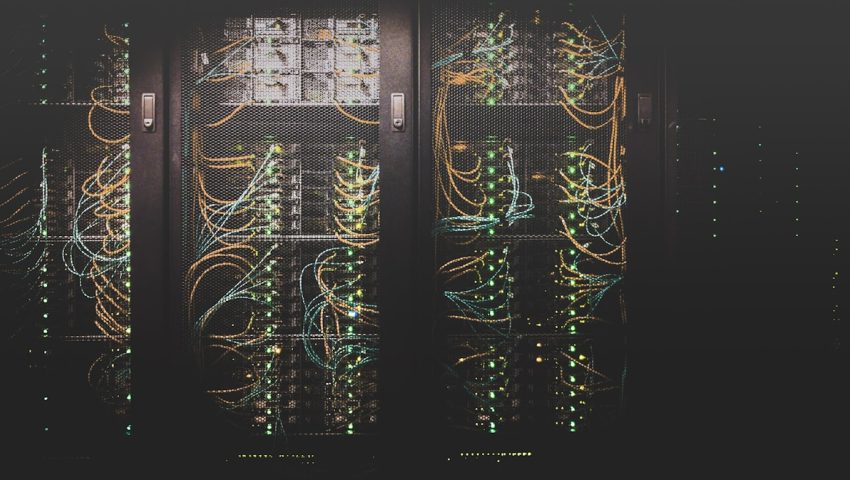
Most businesses cannot justify a full-time infrastructure engineer, yet their revenue depends on systems staying up, patched and backed up. The usual outcome is infrastructure run by whoever built it last — until they leave. We run managed operations across multiple client production systems: scheduled patching, uptime and transaction monitoring with human escalation, tested backup and restore procedures, certificate and domain lifecycle management, and monthly plain-language reporting on health, risk and spend.
The challenge
Operations is invisible work with catastrophic failure modes. Nothing about it produces a visible win, right up until a certificate expires on a Saturday, a disk fills, or somebody discovers the backups have been failing silently for months. The economics trap most companies: a competent infrastructure engineer is a full-time salary, and a business running two or three production systems has no full-time work for one. So the job falls to whoever built the system, and leaves with them. The risk is invisible on the balance sheet — nothing in a P&L says "our backups are untested".
Our approach
We treat operations as a defined recurring service with explicit deliverables, not ad-hoc availability. "Call us if something breaks" is emergency response, and it guarantees you only pay for problems after they have cost you something. Four pillars: scheduled patching, staged where an update could break an application; monitoring that watches whether the business transaction completes, not just whether the server responds; backups that are periodically restored, because an untested backup is a hypothesis; and lifecycle management of certificates, domains and renewals, where a startling proportion of outages originate. Underneath sits documentation, with every account owned by the client.
What the service covers
| Area | What we do | Why it matters |
|---|---|---|
| Patching | Scheduled OS, runtime and dependency updates, staged where risk warrants | Unpatched known vulnerabilities are the most exploited attack path |
| Monitoring | Uptime plus synthetic transaction checks, escalating to a human | A server can be up while what customers actually do is broken |
| Backups | Automated backups, periodic test restores, documented recovery steps | Restores are where backups fail; testing converts assumption into control |
| Certificates and domains | Automated SSL renewal, tracked domain and account expiry | Expiry causes visible outages that are entirely preventable |
| Reporting | Monthly plain-language report on health, risk and spend | Gives a non-technical owner a basis for decisions, not blind trust |
The monthly report is what clients value most and most providers omit. Without it, a managed service is indistinguishable from a silent invoice.
How we onboard a system
Onboarding starts with an audit, not tooling: every workload, host, domain, certificate and account inventoried, with owners and payers identified. This reliably surfaces an orphaned staging server, a cron job on a laptop, a domain in a former employee's personal email. Next, a baseline and an actual test restore, because that control limits the blast radius of everything else. Then monitoring tuned for low noise, patching cadence, and runbooks for the likely failures.
What to look for if you're buying managed operations
Ask when the last test restore ran, and ask to see evidence. That single question separates real operations from a monitoring dashboard. Ask what is monitored — if the answer is server uptime only, your checkout can fail silently for a day. Ask the escalation path at 3am on a holiday. Ask whose name the cloud accounts, domains and DNS are in; they should be yours. Clarify the boundary between operations and development, which is where these relationships sour. Our managed IT services page sets out those lines; cybersecurity services covers hardening.
Typical cost and timeline
General ranges for this category, not any specific client's figures. Onboarding — audit, baseline, monitoring, documentation — typically takes two to six weeks depending on how much undocumented history exists. Ongoing operations is normally a fixed monthly fee scaled to workload count, criticality and response times, and sits well below the fully-loaded cost of a full-time hire for a business running a handful of systems. Cloud spend stays separate, billed to the client's own accounts, which is the only arrangement that keeps it transparent. See how we engage for how ongoing operation is scoped.
The outcome
Clients run production systems without employing an operations team. Incidents are caught by monitoring rather than by customers, restores are tested rather than assumed, and infrastructure became a predictable line item instead of a quiet unowned risk.
Frequently asked questions
Do I need this if my systems seem to be running fine?
Systems that seem fine are exactly where silent failures accumulate — certificates near expiry, failing backup jobs, unpatched vulnerabilities, disks near capacity. None announce themselves until they cause an outage. The question is not whether things work today, but whether anyone would know before your customers did if they stopped.
How is this different from my hosting provider's support?
Hosting providers keep their own platform available and answer tickets about it. They do not patch your application runtime, verify your checkout completes, test restores, track domain renewals, or tell you plainly what is degrading. Managed operations sits above the hosting layer and is accountable for your systems, not their platform.
What actually happens when something breaks at night?
Monitoring detects the failure and escalates to a human rather than filing it into a dashboard nobody watches. That person works the documented runbook, restores service, and the incident is written up with whatever change prevents recurrence. The value is that detection does not depend on a customer complaining first.
Will I be locked in to the provider?
You should not be, and you should verify rather than trust it. Every cloud account, domain registration and DNS zone should be in your name with you holding root credentials, and documentation should let another competent provider take over. Where a provider holds infrastructure in their own accounts, leaving becomes a migration project rather than a notice period.
If nobody is accountable for your production systems staying up, book a free 30-minute technical session via our contact page. For infrastructure needing restructuring first, see cloud integration and infrastructure services.
More work
Other case studies
Omnichannel E-commerce for an Airport Travel-Retail Leader
A full pre-order and click-and-collect e-commerce platform for one of India's largest airport duty-free operations - thousands of SKUs, high-volume se...
ReadCustom CRM for a Multi-Brand Sales Organization
A purpose-built CRM replacing spreadsheets across brands: lead pipeline, follow-up automation and management reporting in one system the sales team ac...
ReadAI Customer-Support Chatbot Platform
An AI-powered support chatbot that answers routine customer questions instantly and hands complex cases to humans with full context - cutting load on...
Read