
Ecommerce Engineering
Direct-to-Consumer Platform for a Craft Beverage Brand
A brand and commerce platform for a craft beverage company: storytelling-led design, product catalogue and direct customer relationships outside the marketplace ecosystem.
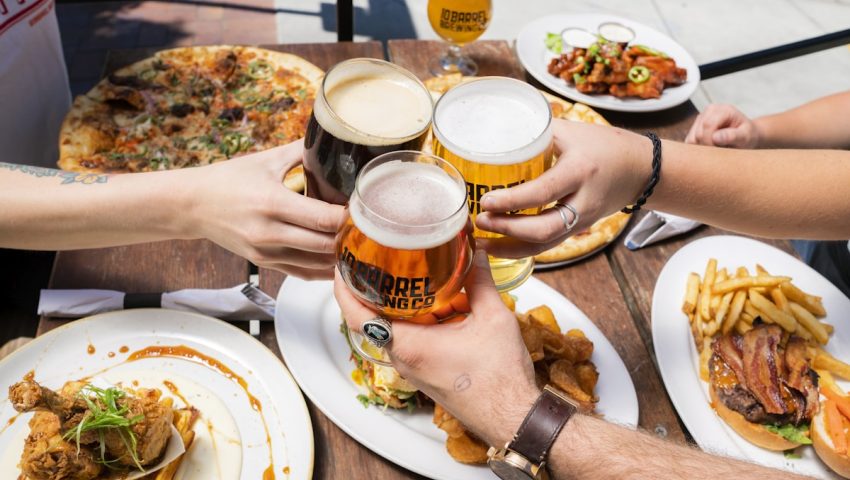
A craft beverage brand was invisible beyond its physical retail locations, and on marketplaces it sat as one commodity among rivals differentiated only by price. The founders wanted what marketplaces structurally cannot give: their own brand experience and a direct customer relationship. We built a storytelling-led platform — range and product pages built around the craft narrative, outlet and availability data, newsletter capture, and a content area for announcements — manageable by the brand's own small team, hosted and monitored by us.
The challenge
Marketplaces are efficient distribution and terrible brand-building. They flatten every product into a comparable row: name, price, rating, delivery date. For a craft producer whose margin case rests on how the thing is made, that flattening is existential. The second problem was data: marketplace sales produce revenue and no relationship. The brand could not tell a repeat buyer from a first-timer, or announce a release to people who had already bought. Beverage adds regulation — direct sale may be restricted, age verification mandatory, shipping rules regional.
Our approach
We treated the site as a brand asset first and a transaction surface second — the opposite of how most e-commerce projects are scoped. The content model was built around the brand's narrative structure (ranges, products, provenance, process, people) rather than a generic grid, with commerce mechanics inside that rather than replacing it. Because direct shipping is constrained here, outlet and availability information became a real feature rather than a footer afterthought: telling a customer where to buy converts intent that would otherwise evaporate. Newsletter capture was the primary conversion on much of the site, because where the transaction happens offline, the owned list is the asset.
Architecture and key decisions
| Decision | What we chose | Trade-off accepted |
|---|---|---|
| Content model | Ranges, products, provenance and stories as structured entities | More modelling up front; carries a narrative, not a spec sheet |
| Editing | CMS-driven, published by the brand's own team | Guard rails needed for layout; removes developers from the launch path |
| Distribution | Outlet and availability pages alongside direct channels | Stockist data must stay current; captures intent regulation would strand |
| Media | Aggressive image optimisation and responsive delivery | Extra pipeline work; otherwise a photo-heavy site loses mobile visitors |
| Hosting | Managed infrastructure, monitoring, backups, automated SSL | An ongoing cost line; campaign spikes stop being the founder's problem |
The commonest way a beautiful brand site fails is loading in eight seconds on mobile during the campaign meant to make it matter. Optimisation is not polish here.
How we sequenced the work
Brand and content structure first — not visual design, but the model of what a range is and how story attaches to each product. Design without that model produces pages that work for the launch products and break on the fourth. Then core pages, outlet data, newsletter and content area, then infrastructure hardening, monitoring and backups before any paid traffic arrived.
What to look for if you're commissioning this
Ask how the content model handles your fifth range, not your first. Ask who can publish a product without a developer, and make them demonstrate it during the project. Ask about mobile load time under realistic image weight. Ask where customer data lives and whether you own it outright — going direct is pointless if your list sits in someone else's tool. Be realistic about your category's regulation before designing checkout; retrofitting age verification and regional shipping is expensive. The classic failures: a bespoke design only the agency can update, a marketplace clone with nicer fonts, unoptimised photography. See e-commerce management and managed IT services.
Typical cost and timeline
General ranges for this class of project, not this client's figures. A storytelling-led brand and content platform with a structured catalogue, outlet data and newsletter capture typically runs six to twelve weeks. Adding transactional commerce with payments, age verification, regional shipping rules and fulfilment integration pushes it to three to five months. Photography and copy frequently sit on the critical path and outside the development budget. See our cost estimator and pricing.
The outcome
The brand controls its own digital presence. Product launches deploy immediately rather than waiting in an agency queue, customer data accumulates in the brand's own systems rather than platforms that rent it back, and the platform has run uninterrupted through campaign spikes.
Frequently asked questions
Is it worth building a direct site if most sales happen through retail and marketplaces?
Usually yes, but for reasons other than direct revenue. The site is where brand narrative, launch communication and owned audience live, and where you tell a customer exactly where to buy. Direct sales may stay a minority channel while the site drives most brand-led demand — value marketplace analytics will never attribute to it.
Do I need full e-commerce checkout from launch?
Not always, and in regulated categories it may be constrained in some regions. A brand and content platform with outlet information and newsletter capture delivers most of the strategic value and extends into commerce later. Deciding that consciously rather than defaulting to a full store often halves initial scope and shortens time to launch.
How do I stop the site going stale after launch?
By ensuring your own team can publish products, stories and announcements without touching code, and building that habit during the project rather than after handover. The practical test is whether a non-technical marketer can add a range end to end while developers are still watching. If not, the site goes stale within a quarter.
What happens when a campaign drives a sudden traffic spike?
That is an infrastructure question, not a design one. It needs managed hosting with headroom, image and page caching, monitoring that alerts a human before customers notice, and tested backups. Pointing paid spend at unmonitored hosting is expensive, because the outage arrives exactly when attention is highest.
If your brand deserves better than a marketplace listing, book a free 30-minute technical session via our contact page. If you are earlier than that, custom software development covers how we scope a first version.
More work
Other case studies
Omnichannel E-commerce for an Airport Travel-Retail Leader
A full pre-order and click-and-collect e-commerce platform for one of India's largest airport duty-free operations - thousands of SKUs, high-volume se...
ReadCustom CRM for a Multi-Brand Sales Organization
A purpose-built CRM replacing spreadsheets across brands: lead pipeline, follow-up automation and management reporting in one system the sales team ac...
ReadAI Customer-Support Chatbot Platform
An AI-powered support chatbot that answers routine customer questions instantly and hands complex cases to humans with full context - cutting load on...
Read